Thursday, 8 June 2017

Ometepe


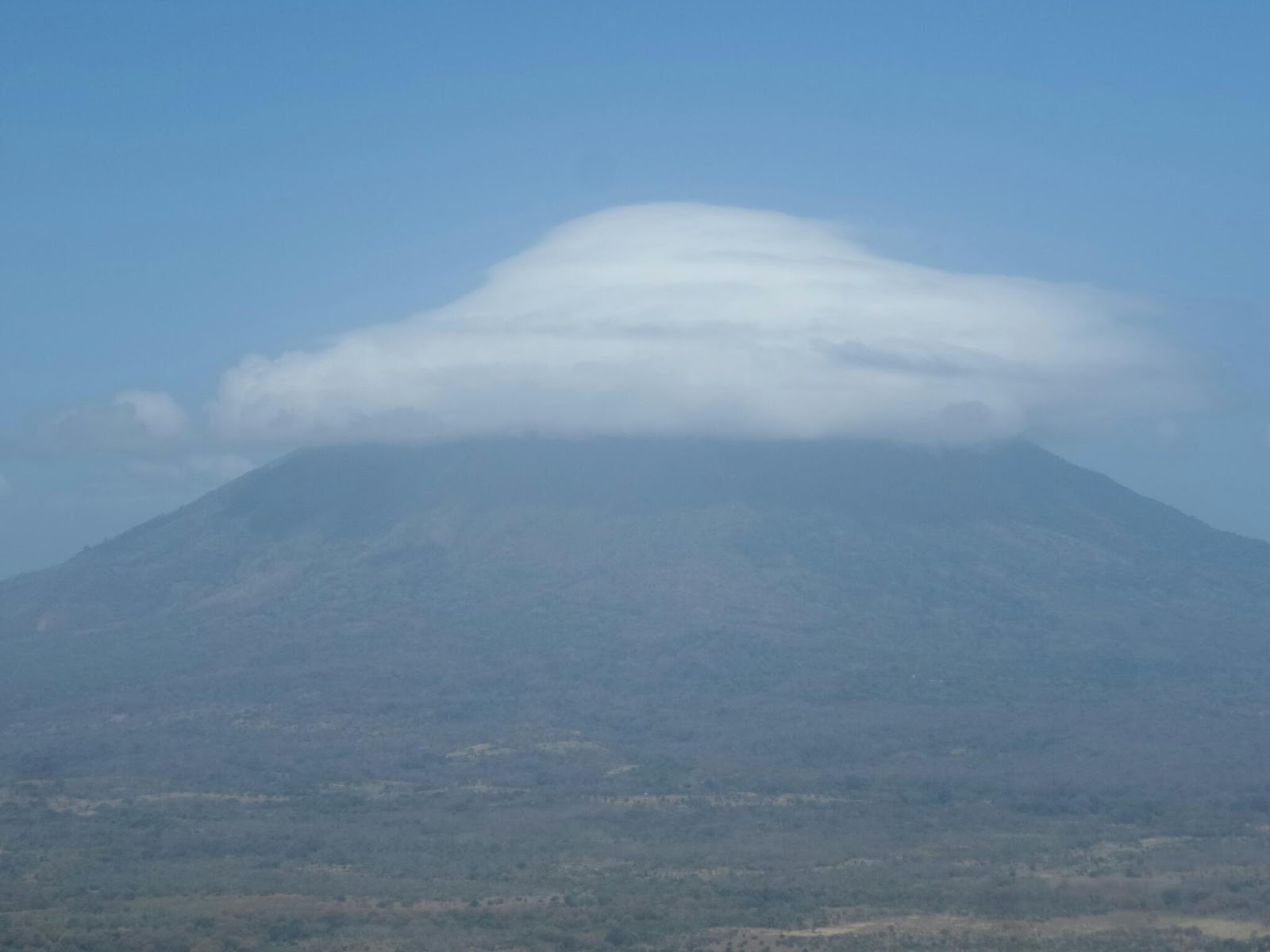
Like two mighty brothers the twin volcanoes of Ometepe are visible from far away. Set on the blue waters of  Lake Nicaragua and their tops almost always covered in clouds they form the magical island of Ometepe. Renowned for ist fertile volcanic soil, abundance of crops and happy people it was regarded as a kind of earthly paradise by the Mayas.


Before we arrived at Ometepe we had to go through a long journey. From the Colombian Amazon in Leticia we flew to Bogota were we had to stay overnight at the airport. We found a perfect spot to put up our hammocks but airport security was obviously not pleased so they woke us up. First night sleeping on the floor (Maybe that would be a travel-changing solution for connection flights worldwide - equip airports with free hammock spaces so that people don't have to crouch on hard evil formed benches). The next morning we connected to Panama City.


Panama and Costa Rica are certainly amazing countries but since they are about as pricey as Europe we decided to skip them and head straight to Nicaragua, which meant bargaining a taxi to Panama's bus terminal and then catch a bus. We actually found a direct bus to Nicaragua (Tica Bus) leaving within an hour, so we decided to jump on it and spend a night on the bus. What they did not tell us was that we wuld only go as far as San Jose in Costa Rica where we would arrive at midnight and change buses with a seven-hour stay at their tiny private terminal. Bloody Bs. Second night sleeping on the floor.


The next day we hopped onto the bus again. After a long wait at the border where we had our bags checked by grim looking border police and their drug dogs our bus driver would let us exit in Rivas about 5km from the ferry point. Since it was already late in the afternoon we feared to miss the last boat and thus sleep the third night on the floor. Fortunately we just made the last ferry at San Jorge.


The boat ride was quite memorable. I loved it. 99% of the other passengers hated it. It was a windy day and the lake was rougher than many portions of open ocean I have seen. The boat would violently shake from one side to the other with the diesel engine running at its maximum and two crew members constantly pumping out water. While indoors people were emptying their stomachs I stayed on the top of the ship holding firmly to the handrails and enjoying that rollercoaster ride.


Although people will tell you to take a taxi, there are decent bus connections on the island. We hopped onto the bus to Altagracia and changed into another bus at the croossing at El Quino to reach the ecofinca of El Zopilote. Although they were fully booked we managed to find a spot to hang our hammocks in Mirko’s place, an Italian guy who tries to live self-sustainible on his piece of land.


The next days we roamed around the area, went swimming, climbed the volcano, cuddled the piglets or just hung out reading. We met some really cool people including an Afghan-German who enjoyed this backpacker life after he had missed his plane after an all-inclusive holiday. All in all, a great experience.

Jungle in the Jungle


A four-nights-five-days electronic music festival somewhere deep in the jungle. When we heard about it from a white-bearded Yogi on our cargo boat cruise to Iquitos it sounded surreal. Ravers, druggies, neo-Hippies and wannabe Indiana Joneses dancing ecstatically to some psytrance or goa? Hmm… Still, we decided to check it out (but only for one night). However, everything would turn out to be way different than we could ever have imagined.

We started out on a hot and sunny day together with Matteo a very relaxed Italian guy we had met earlier on the boat. Our first leg would take us to a small village called Santa Elena on the banks of the Amazon. From there we would walk another two hours into the jungle to a place called San Jorge where the festival was supposed to be.

When we found our lancha collectivo (yeah – public transport there is all by longboat) at Puerto XXX we met our Yogi master and some others that we knew from the cargo boat, who were also on the way to the party. We climbed onboard but as soon as we left the port it started raining heavily. Not that heavy rain you know from home but that tropical heavy monsoon kind of bad-ass Amazon rain that has you wet to your bones within seconds. Mostly they pass as quickly as they come but this one lasted for hours even up until we reached Santa Elena. There was no sense in continuing in this rain so we decided to head back to Iquitos. The only problem was that there was no boat going back…

Instead, our 16-year old captain and his 15-year old assistant offered to bring us to the festival by boat so we would not have to walk. With no other option available we continued up a small side river of the Amazon and slowly, slowly it became darker and darker.

The river was quite narrow at times with a strong current and a confusing route. Since it was rainy season the forest to both sides was flooded giving way to meandering side arms and itemporary islets. More than once we took a wrong turn or crashed into a tree. With the light fading it turned into a dangerous situation since the only lights available were the flashlights of our mobile phones.

Eventually some lights appeared in the darkness around us – we had made it to the festival. We went offboard and with shaking steps walked through a small indigenous hamlet up to a roofed structure that served as the community center. Cumbia and Reggaeton flared from the loudspeakers and children and adults were dancing on the dance floor among tourists and skinny jungle dogs. Yet, no electronic music.

One of the local chicle farmers invited us to stay in his house, an open two-storeyed wooden structure, where we could hang our hammocks. He treated us to a beer and made us immediately feel at home. It was really interesting to hear about his life, his work in the jungle, the many difficulties the remoteness of the hamlet causes and he explained why they had organised this festival: they wanted to put their hamlet on the map, to make it known to the rest of the world (and really, I have tried to locate the village on maps but it is not there – yet). So with the help of three Italian volunteers they tried to organise this festival.

Since it was so difficult to reach San Jorge there were not too many people, maybe around 30 non-villagers, nothing that you would call a festival. And with the locals being the majority of dancers it was just natural to cater to their music tastes. Later on, however, one of the Italians played some House and Jungle.

It was not the “festival” or the music that left me massively impressed with this night but the warmth and friendliness of the locals who would always greet you with a smile. They were obviously very happy that (still) so many people had found their way into their remote place and the whole experience turned out to be far better than the festival that I had expected to take place there. And early next morning, when a longboat was ready to take us back to warm showers, walled houses, electricity and the like, I really wished I would have stayed longer.  

On the Boat to Iquitos

Chachapoyas, Kuelap, Gocta


by Daniel

Northern Peru, especially the area around Chachapoyas, came as one of the most pleasant surprises on our South America tour. Tucked into the outer ranges of the Andes mountains it is a place of wide green pastures, deep valleys, wild rivers, ancient ruins, tranquil colonial towns, sacred burial places complete with pre-Colombian mummies, and a selection of the world's highest waterfalls. It receives as yet relatively small numbers of tourists although this might change in the coming years as the region is set to develop an ever increasing tourist infrastructure. With only a couple of days to spend we were unfortunately only able to see a fracture of the places that were of interest to us but doing so in pleasant and interesting company made it even better.

Staying in the picturesque colonial town of Chachapoyas with its market, small cafes and impressive churches is worthwhile in itself but the biggest draws are to be found in the surrounding mountains. The pre-Incan ruins of Kuelap were erected by the Chachapoya people (which literally means cloud-dwellers) and were later captured by the Incas. It is an impressive citadel sitting on a massive limestone boulder high up on a mountain above Utcubamba river, literally in the clouds. It is surrounded by a massive impenetrable wall and features a distinct architecture of round multi-storey houses with spacious rooms. It is possible to visit the ruins independently using rare public transport, although taking a tour might even come cheaper (see link at the bottom of article).

Another impressive feat of the region are the waterfalls of which we visited only the Gocta falls. At 771m it is one of the highest in the world although there are even higher waterfalls in the area, like Yumbilla falls at almost 900m. If you wish to visit Gocta you should start from Chachapoyas with the first bus headed to Pedro Ruiz and ask to be dropped at the Gocta/Cocachimba junction. From there you can hitchhike or take a mototaxi to Cocachimba village. It is a spectacular hike to the base of the waterfall and if you backtrack a little bit there is an unmarked path that winds its way along the cliff to the top of the falls. Ultimately you will end up in San Pablo village where you can eat and take a mototaxi to the main road again. If you hate going uphill you could as well start in San Pablo and end in Cocachimba. Just be careful not to stay too long since it might be a problem to find transportation after dark. We ended up standing at the roadside when darkness crept in and had to hitchhike to Pedro Ruiz where we just managed to catch the last minibus to Chachapoyas.

Should you want to continue to Yurimaguas from this region and then take the boat to Iquiotos, there are night busses from Pedro Ruiz to Yurimaguas from where you can catch the boat to Iquitos on the same day.

I highly recommend the Wikitravel article for travelling the region independently wikitravel.org/en/Chachapoyas

Special thanks to Lieke, Majd and Camellia for existing


Scenery around Chachapoyas

Upper section of Gocta falls
A view from the uphill trail
Lower section of Gocta falls

Narrow staircase leading into Kuelap

Llamas inside Kuelap ruins

Ornaments depictiong Jaguar eyes

View of Kuelap round houses


Bromelias grow in abundance among the ruins

Macchu Picchu


A well visited highlight that I have visited for the second time now. There’s no need to describe much except for one thing – there is an option to visit Macchu Picchu on the cheap. The Lonely Planet did not mention it (note to self: I should throw it away) and I thought it is a well-kept secret (but it isn’t): Take a bus to a place called ‚Hidroelectrica‘ and walk into Aguas Calientes/Macchu Picchu Pueblo. You can do it with public transport but the travel agencies sell the ride so cheap  that it might be even less than doing it with chickenbusses.

Don’t ride back home early the same day of your visit but rather stay two nights in Aguas Calientes. The ruins are at their best in the early morning and late afternoon when it is less crowded and they can certainly keep you busy for the day. Also, you can find cheap eateries in town if you move away from the main tourist boulevards. You will also get a cheaper room if you do not book in advance but just pop up in Aguas Calientes. There are plenty of empty rooms for every budget and if a hotel has spare rooms, they fill certainly find you.

Tuesday, 23 May 2017

Isla del Sol


At times evoking images of mythical Greek islands at others of the enclouded and barren ridges of Wales or the sun entrenched bays of the Spanish coast – Isla del Sol has that all. However, the setting is a remarkably different one. High up in the Andes mountains at an altitude of floating on terrific Lake Titicaca it is also a very spiritual place already revered by the Incas.

Tourism is the main source of income and all the villages have their share of hotels and homestays. Challa, the middle village, is the least touristy one.

Most visitors book a day trip and hike from the middle to the south part. While this is certainly worthwile you might just as well spend a night or two. My advice would be not to book a tour but take the regular boat from Copacabana and then find a place to stay. We ended up following a 12 year old girl to her parents‘ place where we got a private room with an amazing view of the Challapampa bay complete with a snow capped mountain range looming in the distance for under 8US$.

There is a beach in the northern village of and although the lake is pretty cold there will be enough sun to quickly heat you up afterwards. For the afternoon we decided to stroll to some Inca ruins called El Labirinto for their winding passageways.

Everywhere you go you will encounter picturesque scenery with the azul waters of Lake Titicaca as a backdrop. The rocks change their colors from red to black to white, sometimes covered in green, sometimes barren. Without noticing it you might be encircled by a cloud on the ridge and you will end up in a different landscape from the one you had just seen with a clear vista.

Isla del Sol is a happy island which is reflected by its animals. Pigs, horses, donkeys, sheep, lamas, alpacas, chicken, dogs, cats – they all wander about freely undisturbed. Coming back from a hike we encountered a family of piggies and rested to watch them interact and eat. A group of donkeys passed by. One of the piglets came to check us out. Eagles circled the skies. Paradisical.

So what is there to do on Isla del Sol? Nothing much, which is nice enough. Rest on one of the ancient stone terraces and let the day go by with a nice book, hike along the ridge or even to the uninhabited western peninsula where you will encounter nobody, watch an eagle from close when they come to sit on one of the crosses on the mountaintops, enjoy the pure and fresh highland air, feel alive.   

Saturday, 1 April 2017

Uyuni – tips and tricks for avoiding the crowds


Wow! Uyuni was great! We had an amazing group and a fantastic driver. Check out the pictures and prepare your trip to the remote lagoons and huge salt flat in Bolivia’s southern highlands with these helpful tips:

-          The area is very remote and high up in the mountains. Should you be tempted to visit without a tour be reminded that there is no public transport, no shops, really nothing but some mining villages and the tour agency camps

-          Pick your tour operator wisely. It is mostly same-same-but-different but you can save a lot of money and still have a nice trip by shopping around

-          Your guide will not speak English although you have been pomised. Expect to pay significantly more for an Engish speaking guide

-          No need to book anything in advance (it will be a lot more expensive doing so). You can actually show up in the morning and book a tour for the same day, which means you can come and go with night busses

-          Although the Lonely Planet or Booking.com might suggest otherwise, you can find cheap and nice hostels in Uyuni

-          Bring warm clothes. We even had snow

But now for the real important tips concerning your tour. There are many tours going every day with twenty to forty jeeps. They drive in a bulk so you will always be with a lot of people. However, I feel that these natural treasures can be cherished more if you are alone. Here is how you can achieve this easily:

-          Do the tour in reverse. Start with the Lagunas and end it with the Salar de Uyuni. You’ll mostly be alone on the first day

-          Another advantage is that you will see the spectacular sunrise over the Salar

-          Should you be trapped in the endless caravan of jeeps, simply ask your driver to do the furthest attraction first and visit the others on the way back or to skip one and get ahead (sharing the hot springs with 6 other people was so relaxing compared to the beach party of 120 people three hours before)

-          Keep in touch with your driver. If you are friendly he will do some extras for you. Remember that the 3-day and even the 4-day tours mean that you will spend most of the time in the car